

Pl. 01
Sales & RevOps
Qualify demand, enrich accounts, route opportunities, and keep the CRM accurate without another manual queue.
Lead qualification, CRM enrichment, Pipeline reporting.
Explore this expertiseAI product & automation agency
We turn slow, manual operations into governed production software. A named senior team stays accountable through production. A named lead assembles the product, engineering, and automation specialists your scope needs — and stays accountable through production.
*Eligible single-workflow Builds, subject to the client dependencies and milestone written into the SOW.
Teams that ship with us

The term, defined
An AI-native agency is a services firm built around AI from day one — in how work is scoped, priced, produced, and delivered — rather than a traditional agency with AI tools bolted on. Process is software: every step either runs through a system or leaves a trace in one, and senior humans review everything consequential.
The category is emerging because the economics of delivery flipped. AI collapsed the cost of the first 80% of most builds, so hourly billing now punishes the client and rewards the slow. What remains scarce is judgment, integration, and accountability — and a firm has to be rebuilt around software, not staffed hours, to sell those at a fixed price.
It is also, plainly, what you typed into the search bar. We took the name because we are organised around the model — here is what that changes for you, concretely.
The first meeting is recorded and transcribed. Nothing you explain gets lost, re-asked, or reinterpreted three weeks later.
AI drafts the scope from the call; a senior human corrects, prices, and signs it before it reaches you. Human in the loop, in writing.
Engagements are fixed-price and paid online like a product — not a quote cycle that takes longer than the discovery itself.
Milestones, demos, and decisions land in the app as they happen. Following your build should feel like tracking a parcel, not chasing a PM.
Handover is a working session, not a PDF: a human sits with your team until the workflow runs in your hands.
Where we create leverage
We do not drop a chatbot on top of broken work. We redesign the process, connect the systems, define the human review path, and own the result in production.
Pl. 01
Qualify demand, enrich accounts, route opportunities, and keep the CRM accurate without another manual queue.
Lead qualification, CRM enrichment, Pipeline reporting.
Explore this expertisePl. 02
Build governed content and campaign systems where AI creates leverage and senior editors protect the brand.
Content operations, SEO production, Campaign workflows.
Explore this expertisePl. 03
Resolve repetitive requests faster, preserve context across channels, and route low-confidence cases to a human.
Support triage, Customer onboarding, Service operations.
Explore this expertisePl. 04
Move documents, approvals, reporting, and internal requests through one observable workflow instead of inboxes.
Document processing, Finance operations, People operations.
Explore this expertisePl. 05
Give reviewers source-grounded drafts, confidence gates, and an audit trail for every consequential decision.
Compliance review, Risk triage, Contract operations.
Explore this expertisePl. 06
Turn fragmented policies, records, and operational data into cited answers and decision-ready reporting.
Knowledge retrieval, Executive reporting, Data analysis.
Explore this expertiseSelected product & automation work
Healthcare technology · Medical imaging
Live

Swiss teleradiology & medical imaging provider
Referring-site footprint
Zero-footprint DICOM viewer, no install or VPN
Exclusive technology partnership, active since 2025 — build + run, ongoing
Read the case studyReal estate · Property operations
Live
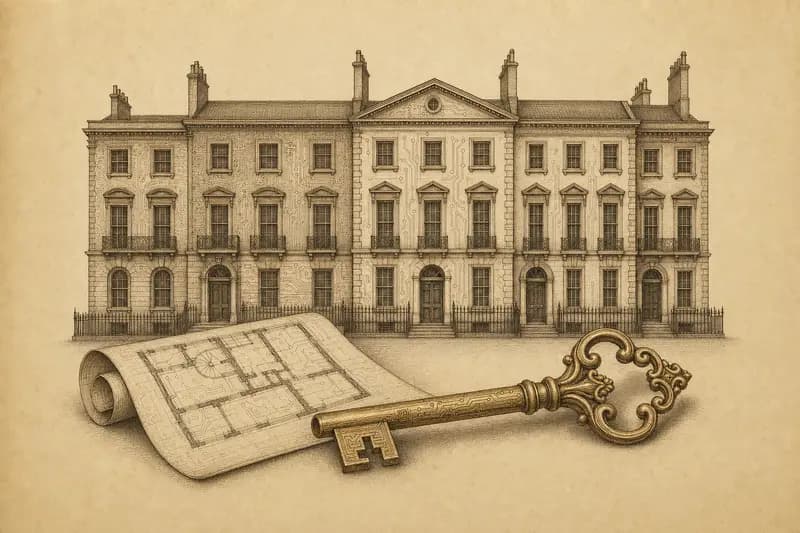
Property management operator · GCC region
Operational surface
55+ management screens in one SaaS
Q4 2025 → Q1 2026 — ~14 weeks to first production release
Read the case studyLegal services · National marketplace
Live

Government-licensed legal services platform · GCC region
Market coverage
Single ministry-licensed national marketplace
Q1 → Q2 2026 — ~16 weeks from kickoff to public launch
Read the case studyClient identities are withheld where agreements require it. Every delivery record describes a real production scope, architecture, timeline, and outcome.
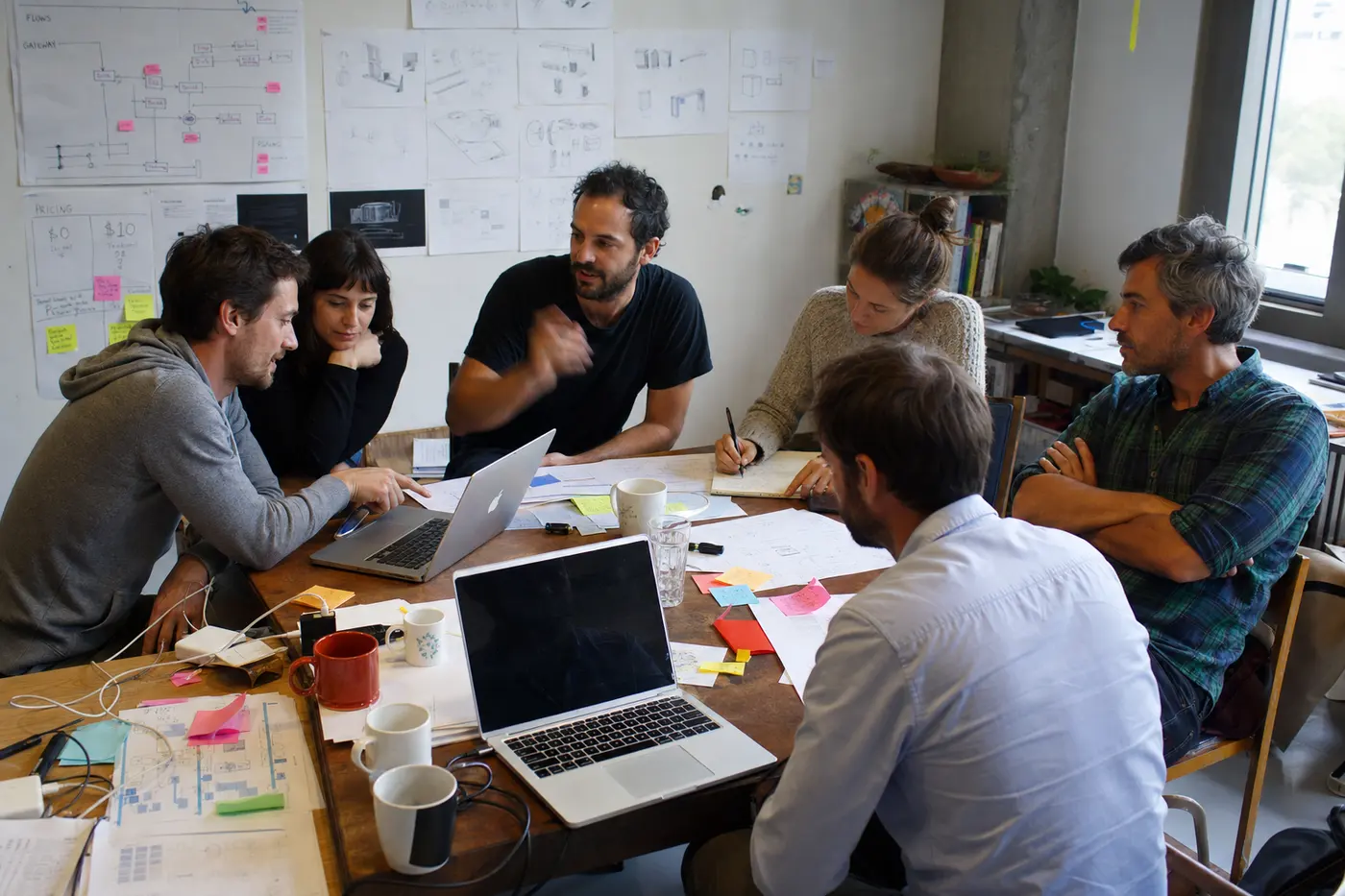
AI-generated illustration — it does not depict current employees. Assigned specialists are named before kickoff.
US · UAE · EU delivery
A named team, not a black box
Every engagement has a named lead and a compact delivery pod selected for the workflow. The people who scope the work stay close enough to build it, test it, and answer when production gets complicated.
Maps the operation, edge cases, owners, and success metric.
Builds the workflow, integrations, interfaces, and evaluation layer.
Connects source systems, retrieval, permissions, and observability.
Designs human review, launch, adoption, and the operating runbook.
How delivery works
You see working software early, make decisions on evidence, and know exactly what must be true before the workflow can move without a human.
Delivery feed
Live
01
We observe the real workflow, systems, exceptions, risks, and KPI before prescribing any model.
Workflow map, baseline, scope
02
A thin slice runs on representative cases early, so feasibility is proved before the full build.
Working slice, test set, decision
03
We connect the systems, reviewer queues, observability, evals, and failure paths into one product.
Production software, controls, demos
04
We launch with your team, measure the result, tune the workflow, and hand over the full operating system.
Cutover, runbook, code and IP
Governed by design
Every workflow ships with evaluation, observability, permissions, and a human escalation route.
Human review gates / labelled evals / audit logs / role-based access / versioned prompts / no vendor lock-in.
In their words
Verbatim quotes from client retrospectives. Company names are shared once clients approve public attribution — ask for references on the first call.

Founder, AI Pricing SaaS
AI SaaS · DACH region
“They shipped the production version of our pricing brain in 6 weeks, including the billing layer and the onboarding flow. We had been bouncing between contractors for 4 months before.”
Shipped outcome
From 0 to live SaaS with paying customers in 6 weeks. Production billing live, AI onboarding flow shipped, 2 pricing tiers active.

Founding team, regulated legal marketplace
Government-licensed legal services platform · GCC region
“A complete bilingual platform compliant with regulator requirements. Technical quality and delivery speed are outstanding.”
Shipped outcome
Ministry-of-Justice-licensed national legal marketplace, EN/AR bilingual, in 16 weeks. Directory + bookings + legal tools + emergency contacts.

CTO, multi-region property operator
Property management operator · GCC region
“We replaced spreadsheets and 4 disconnected tools with a single OA platform. 55 screens, 47 tables, a voting platform, and an internal portal — all on the same identity layer.”
Shipped outcome
Centralised property operations across multiple owners associations. 14-week first release; 8-week follow-on for the staff portal; 6-week follow-on for e-voting.
3-minute project diagnostic
Tell us where work gets stuck. A senior builder will review the context and return with the useful questions, dependencies, and next step.
Human review
We read the workflow and constraints.
Concrete response
You hear back within one business day.
Useful next step
We scope it, redirect it, or say no plainly.
No pitch deck. No automated quote. No mailing list. The person reviewing the brief understands how the workflow would be built.
Questions before kickoff
The first conversation is a fit check with a builder — not a qualification script.
It is a product and engineering team organized around AI workflows rather than hourly staffing. We redesign the work, build the software and controls, connect it to your systems, and remain accountable for the production outcome.
Start where volume, repetition, delay, and measurable cost overlap. The strongest first workflow has a clear owner, enough historical examples to evaluate quality, and a human escalation path for uncertain cases.
Discovery is typically $5k–$8k. Production Build engagements start at $15k and are fixed-price once the workflow and integrations are scoped. An optional month-to-month Run phase is quoted separately.
For a single-workflow Build, the contractual target for the first production workflow is week 7. Broader systems are scoped on a longer timeline. If we miss the milestone written into your SOW, the applicable delivery guarantee is triggered.
Every engagement has a named delivery lead and a compact senior team selected for the workflow: product, engineering, automation, data, and domain expertise as needed. AI accelerates the work; named humans own the architecture, review gates, communication, and shipped result.
Uncertain outputs route to a reviewer instead of silently shipping. We version prompts, evaluate changes against labelled cases, and log the input, output, model, confidence, and reviewer so errors can be traced and corrected.
Have a workflow in mind?
A senior builder will review it and reply with the useful questions or a concrete next step within one business day.
Senior review, one business day
Discuss your workflow


